Different Types Of Electric Vehicles
Don't get your head in a pickle by going green. This guide will give you all you need to know on the different types of electric vehicles.
Time to go electric?
You know going electric make sense when it comes to their lower emissions and you’ve probably heard the law is changing around the sales of petrol and diesel models. But there are different types of EVs and a rapidly increasing number of models to choose from. But what if you can’t charge at home and will the range meet your needs?
Let’s explore the basic types. Understanding just a little about how they work will help you choose the right type for your kind of driving pattern. And yes, there is an EV to suit everyone, even if you can’t charge at home.
Three is a magic number
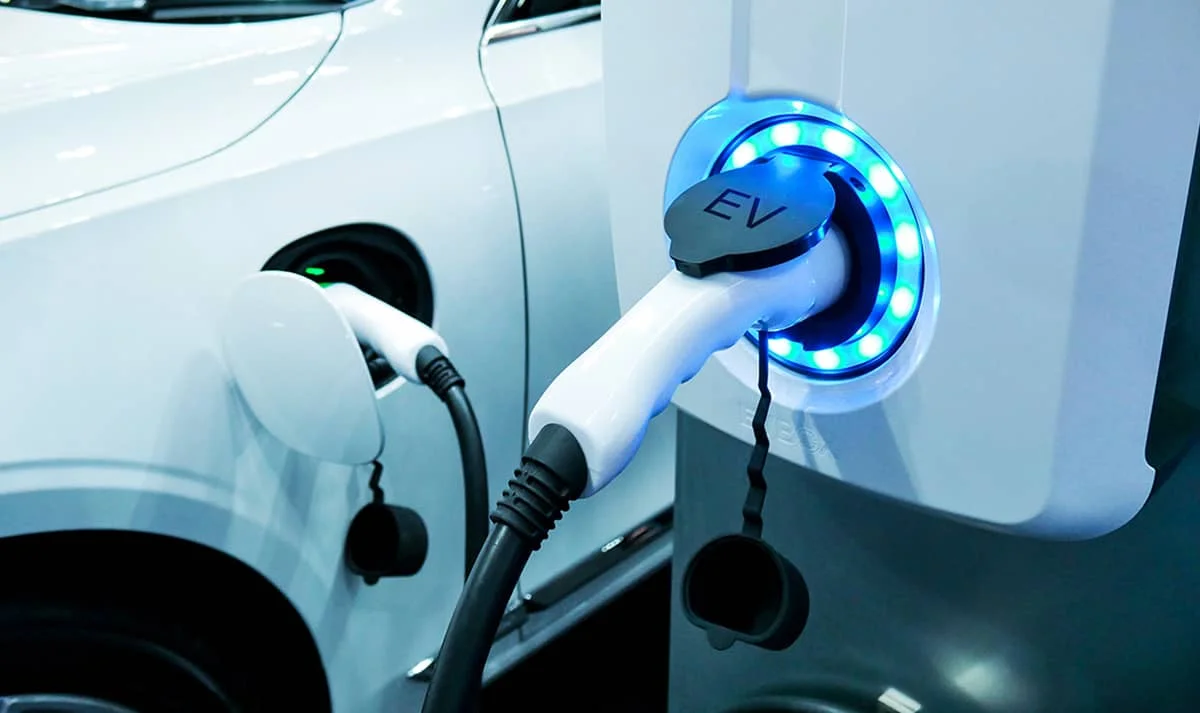
All electric vehicles use a re-chargeable battery, though they vary when it comes to how the batteries and motors are used. Some EVs are powered by battery alone, some use a combination of petrol or diesel and battery, some don’t even need plugging-in!
Yes, we mentioned petrol: the UK government has announced it will be banning the sales of purely diesel- or petrol-powered cars from 2030 but vehicles will be allowed to use petrol or diesel alongside electric motors, and that’s where hybrids come in.
And what’s that about not plugging-in? That’s right, there are some hybrids which charge themselves while you drive.
Let’s explore the three basic types of EV:
The fully-electric or battery electric vehicle (BEV) is the purest form. There is no traditional internal combustion engine at all.
Commonly referred to as just an EV, this type of electric vehicle runs solely from the energy contained in its electric battery. Having many charging points across the UK and the potential to install your own at home makes the all-electric vehicle convenient, eco-friendly and cost effective.
Importantly, battery electric vehicles produce zero emissions so they don’t generate any nasty tailpipe pollution that traditional vehicles do. In fact, they have no tailpipe!
The concept of range anxiety is becoming a thing of the past too. New EVs can travel impressive distances on one charge; even the small, futuristic-looking Honda-e offers up to 136 miles on a full battery. And faster charging means they are becoming increasingly practical for many.
There are other advantages. They’re quiet with just the gentle whir of the motor. And EVs (of all types) are automatic. So there’s no changing gear to bother about: it’s just one pedal to go and the other to stop. This makes driving much more relaxing.
A fact which may surprise you is that EVs are actually rather nippy. Unlike a petrol or diesel engine which has to rev higher to produce more power, electric motors have this from the off.
The downside is they do need charging. But we’re used to charging our mobile phones regularly and the principle is exactly the same.
Customers seeking an EV are no longer limited by choice: most manufacturers build EVs, from Volkswagen, KIA and Honda to premium brands such as BMW, Mercedes-Benz and Tesla. KIA’s e-Niro, with its 64kWh battery, will give you a very sensible range of up to 282 miles.
This year has brought many new EVs to market, so there’s a huge number of new models too. From the practical all-new Vauxhall Corsa, funky Volkswagen ID.3 and futuristic Honda-e, the hardest thing about leasing an electric vehicle is picking a model you fancy.
The hybrid - as its name suggests - uses a mix of two fuel types, one of which is electric. Using two sources for its energy, the hybrid is a best-of-both solution.
Hybrids improve emissions by reducing the amount of time the petrol or diesel is used and adding additional electric oomph so the engine doesn’t have to work as hard. Hybrids often have smaller engines because power is supplemented by the electric motor. Some low-speed driving can be done using just the electric motor. This combination is designed for lower emissions and increased economy.
Power from the electric motor and petrol (or diesel) is swapped automatically. The car can be powered by either source (or both) and the switching all happens seamlessly. The important point is the battery is charged on the go, both taking power from the engine and through regenerative braking.
Mild hybrids and full hybrids
When looking at model descriptions, you may see reference to mild hybrids (or MHEVs). Here’s the difference:
Regular hybrids have larger batteries and make more use of EV-only, particularly on lower speed, stop-start journeys such as in town or on the busy commute. The driver has more control over the power delivery modes.
Mild hybrids have less battery-only ability but can still improve fuel consumption. The electric motors generate good levels of torque which is advantageous for heavier vehicles, so you will see Land Rover models with MHEV technology for example. The power delivery control is all done automatically via the car’s computer.
There’s a great choice when it comes to hybrids. KIA Niro, Toyota Yaris, Honda Jazz, Hyundai Kona and Suzuki Swift, are all good petrol-electric hybrid options. We also stock HEV models from Hyundai, Honda and Peugeot.
Plug-in hybrids have larger batteries and are designed to run solely on electric where possible. The Mercedes-Benz A250e, for example, can manage up to 44 miles on a full charge. This is more than enough to complete most journeys in fully electric mode.
Like a regular hybrid, it will switch smoothly once the battery is low - and will combine both electric and petrol/diesel for maximum performance if you put your foot down hard.
While computers will happily switch power sources automatically, PHEVs also allow the driver to take control over when to be using or conserving battery energy. This means you could drive to a city using petrol, keeping the battery charged, and then switch to electric to cut emissions in low emission zones.
The sensible electric range of a PHEV means much driving - even at motorway speeds - can be done on electric-only. This is both emissions-friendly yet still provides the petrol engine for the occasional long haul.
Like the regular hybrid vehicle, they can do some charging while on the move - from the engine and regenerative braking - but they do need to be plugged-in to charge for maximum benefit.
Mercedes-Benz, BMW and Volvo all offer exciting plug-in hybrid models, the Volvo XC40 Rechardge and C Class Diesel Estate 300de being stand-out models for refinement and design.
Choosing the best electric vehicle
With the harmful effects of burning fossil fuels well known, a vehicle which can be run on sustainable energy is one way we can make a difference. The big bonus is there is a huge range of exciting EVs, HEVs, MHEVs and PHEVs to satisfy your needs and wants. They’re easy and civilised to drive and really do represent the future of motoring.
Leasing allows you to jump into this world of electric motoring with low financial risk: you will understand costs up-front and you agree to the leasing term, after which you are free to choose again.
You also have the chance to sample the world of EVs with a plug-in hybrid. If you find you barely need to put any petrol/diesel in it, perhaps the car after could be a fully-electric model.
And for those without local charging facilities or space for a charging point, hybrids are a sensible option.
Which electric vehicle type to go for will depend on your budget and driving intentions, but that’s the easy part. The hard part is picking a make and model when there are so many to choose. Use our helpful website and easy filtering tool to guide you on picking your next electric vehicle today!
Electric Lease Deals
View a selection of our electric car lease deals below.